Hilton Hotels And Resorts: A Century of Hospitality and Global Prestige
The history of Hilton Hotels, from Conrad Hilton’s 1919 Mobley Hotel in Texas to a global hospitality group, with its valuation, ownership and finest resorts.

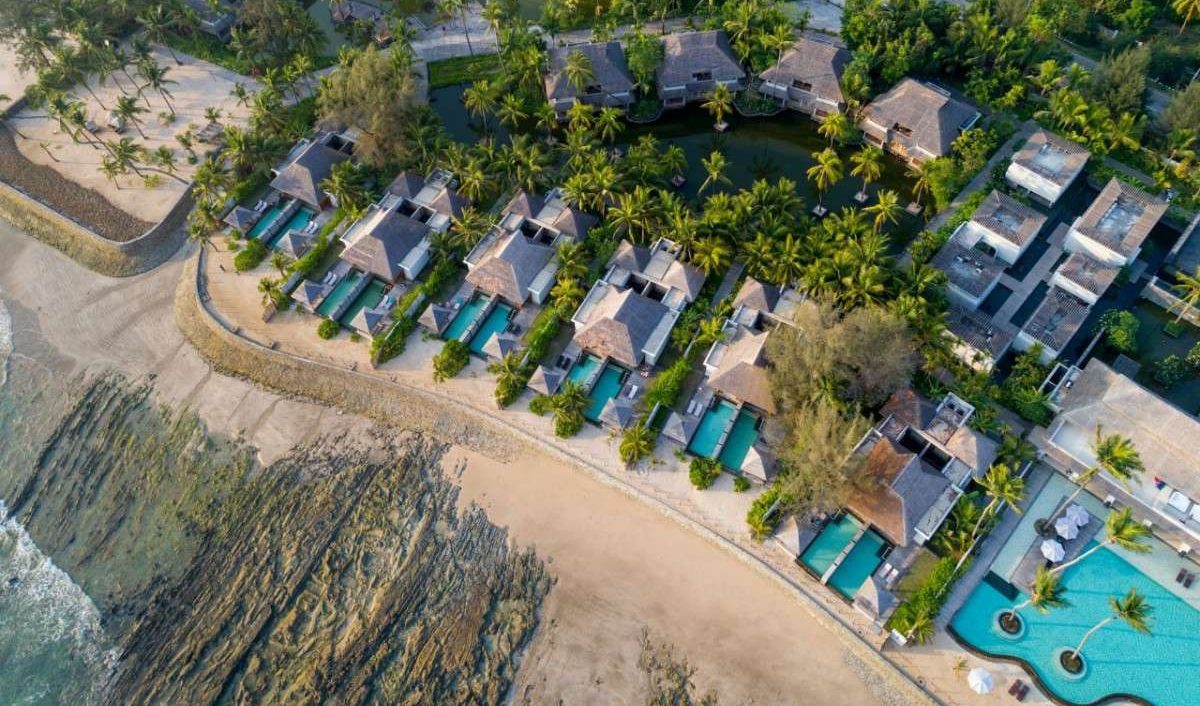
I recall my stay at Hilton Grand Vacations in Las Vegas in 2012 as a defining highlight of an unforgettable journey. Hilton Hotels possess a distinctive global character, yet there is something inherently more welcoming and personable about their presence in the United States.
The Hilton brand was born in 1919 when Conrad Hilton purchased the Mobley Hotel in Cisco, Texas. What began as a modest venture soon evolved into a global powerhouse in the hospitality sector.
Hilton’s philosophy was simple yet groundbreaking for its time: “take care of the guest and the business will take care of itself.” As a service freak myself, I find this motto one of the best slogans ever. This customer-centric vision laid the foundation for a brand that would come to redefine hotel experiences across the world.
By 1943, Hilton became the first coast-to-coast hotel chain in the U.S., and in 1949, the Waldorf Astoria in New York became the brand’s flagship luxury hotel. Hilton’s global ambitions took off soon after, with the opening of the Caribe Hilton in Puerto Rico in 1949, its first international property.
Hilton Hotels is owned by Hilton Worldwide Holdings Inc., a publicly traded company listed on the New York Stock Exchange (NYSE: HLT). Following a 2007 buyout by The Blackstone Group for approximately $26 billion, Hilton re-emerged in the public market through a historic IPO in 2013.
Today, Christopher J. Nassetta serves as President and CEO of Hilton Worldwide. The company operates under a “brand and management model,” meaning it owns few properties outright but manages thousands globally under its umbrella of brands.
More For You
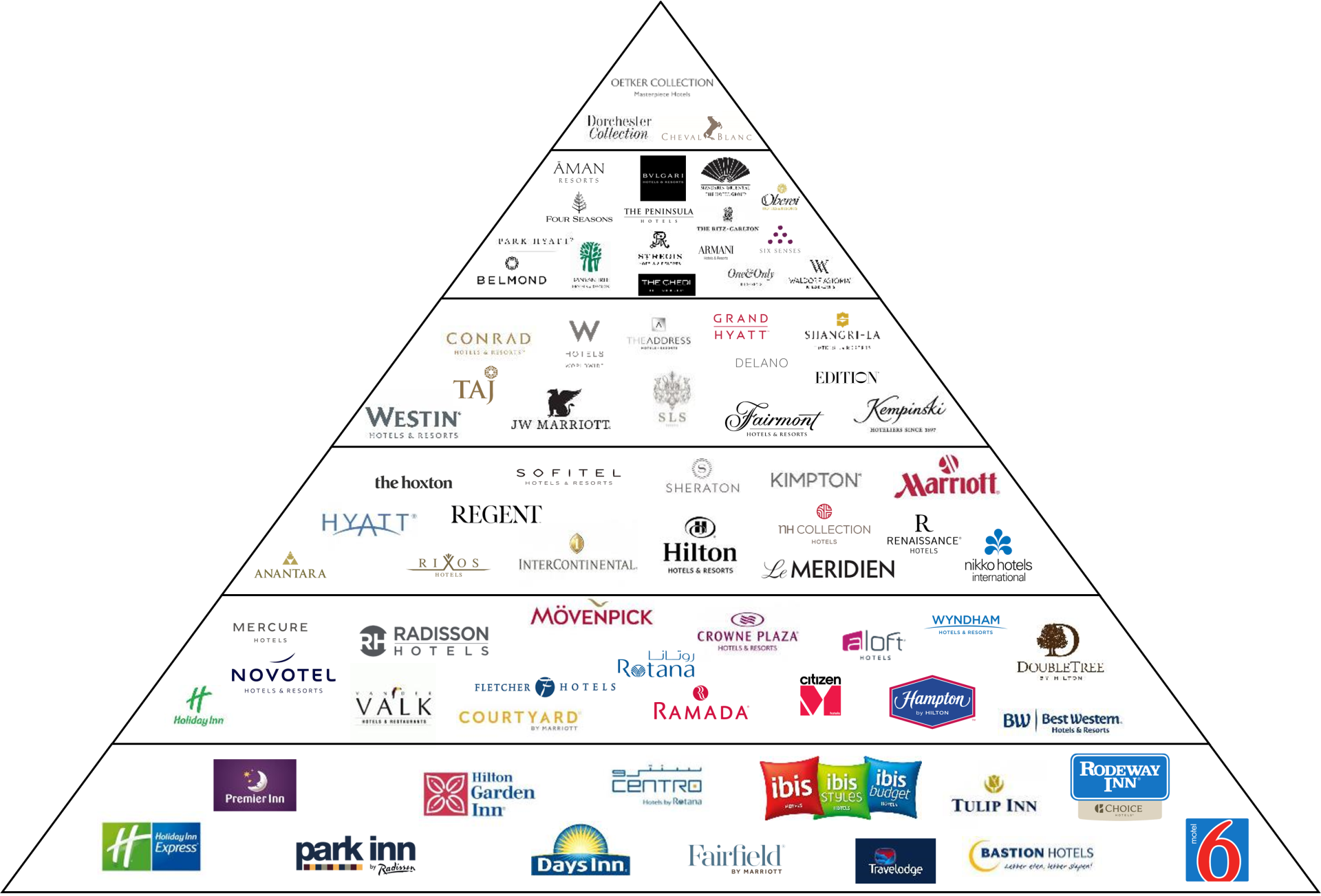
Hotel Brands Pyramid: A New Brand Hierarchy
Luxury Hospitality Defined: Four Seasons
Spotlight On: The Oetker Hotel Collection
Valuation of Hilton
According to trusted sources like Hilton Investor Relations, Forbes and Financial Times, as of early 2024, Hilton Worldwide Holdings is valued at approximately $50 – 55 billion (market cap).
The company generated $10+ billion in annual revenue, with net income surpassing $1 billion. Hilton maintains a high RevPAR (Revenue per Available Room) across luxury and lifestyle segments, maintaining profitability and investor confidence even through market fluctuations.
Ownership and Corporate Structure
As of 2024, Hilton operates 7,500+ properties, across 126+ countries and territories, offering over 1.2 million rooms.
The portfolio includes 22 brands, ranging from 5 stars luxury to 2 stars midscale, as showing below. The Hilton Brand Pyramid visually categorizes Hilton’s hotel brands based on the market positioning, guest experience, and service level. From top to bottom, the pyramid reflects a descending scale of luxury and exclusivity to broader accessibility and affordability. Here’s a breakdown of each tier:
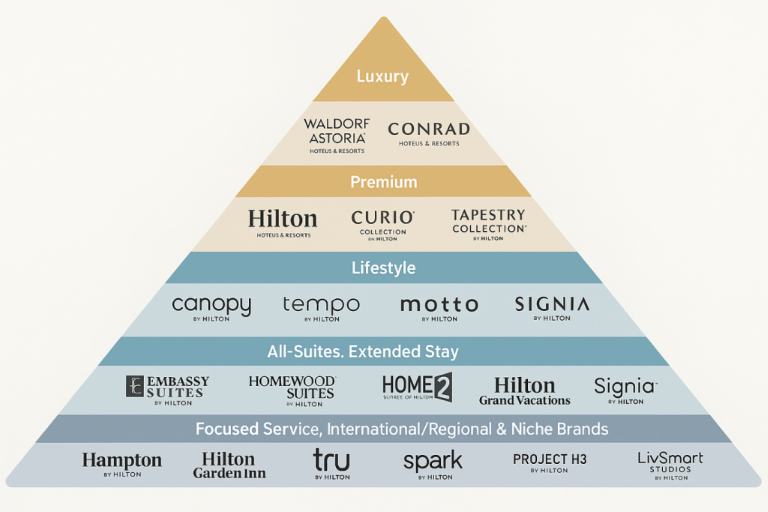
Luxury (Top Tier): Featuring Waldorf Astoria and Conrad Hotels & Resorts, representing Hilton’s most opulent offerings. These properties are defined by exceptional service, iconic design, and exclusive locations. Guests here expect bespoke experiences, fine dining, and top-tier amenities.
Premium: Including Hilton Hotels & Resorts (the flagship brand), Curio Collection, and Tapestry Collection. These are upscale, full-service hotels combining reliability with local flair. Curio and Tapestry consist of independent-style properties with distinctive design elements.
Lifestyle: Canopy, Tempo, Motto, Doubletree by Hilton, and Signia, focusing on modern aesthetics, wellness, and neighborhood integration. These brands appeal to younger, design-conscious travelers who value flexibility, tech-forward services, and social atmospheres.
All-Suites & Extended Stay: Featuring Embassy Suites, Homewood Suites, Home2 Suites, and Hilton Grand Vacations are tailored for longer stays, families, and group travelers. Emphasis is placed on space, kitchen facilities, and self-service amenities with a blend of convenience and comfort.
Focused Service, Regional & Niche Brands (Base Tier): Hampton, Hilton Garden Inn, Tru, Spark, Project H3, and LivSmart Studios focus on affordability, consistency, and essential services. These brands are often located in urban, highway, or secondary markets and appeal to budget-conscious travellers.
Most Beautiful Hilton Resorts in the World
Here are some of the most spectacular Hilton resorts globally:
1. Waldorf Astoria Maldives Ithaafushi: A private island retreat with overwater villas.
2. Conrad Bora Bora Nui, French Polynesia: Iconic overwater bungalows with lagoon views.
3. Hilton Seychelles Labriz Resort & Spa: Nestled on a national park island with lush jungle surroundings.
4. Waldorf Astoria Los Cabos Pedregal, Mexico: Dramatic cliffside luxury and sea views.
5. Hilton Moorea Lagoon Resort & Spa, French Polynesia: Perfect for honeymooners.

Facts You Didn’t Know About Hilton Hotels
A. The famous Piña Colada was invented at the Caribe Hilton in 1954 by bartender Ramón “Monchito” Marrero as a welcome drink for the hotel guests.
B. The Roosevelt Hilton, NYC, was the first hotel chain to install televisions in guest rooms in 1947.
C. Hilton launched multi-hotel reservations through a centralized system (HILCRON) in the 1948, pioneering modern CRM.
D. Hilton Honors, its loyalty program, has over 200 million members, making it one of the largest in the world.
E. Hilton Tokyo Bay is an official hotel of Tokyo Disney Resort.
F. Hilton Hotels appeared in many great movies like James Bond, Mad Men, Ocean’s Eleven, and Sex and the City, reinforcing their pop culture cachet.
G. Many celebrities have regularly stayed at or collaborated with Hilton’s luxury properties like George Clooney, Beyoncé and Jay-Z, Kylie Jenner, Angelina Jolie, David and Victoria Beckham, Brad Pitt, Lady Gaga, Tom Cruise.
There is no doubt that Hilton Hotels brand has transformed the notion of hospitality over the last century, from Texas to Tahiti to Dubai, from mid-century modern marvels to sustainable eco-retreats. As a pioneer in the hotel industry, Hilton doesn’t just offer rooms, it delivers curated experiences that span generations, cultures, and aspirations.
With an unwavering commitment to innovation and excellence, Hilton remains one of the most recognized and revered hotel brands in the world.